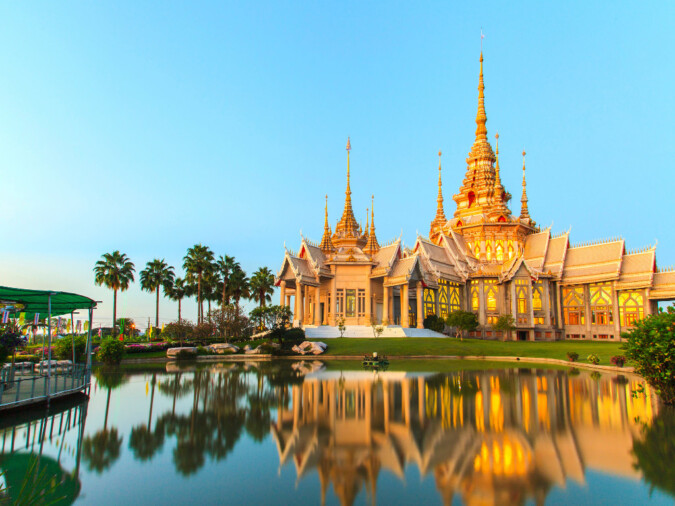
The numbers are turning heads. Here's what they mean for your next trip.
Vietnam had a record year in 2025. Thailand did not. For the first time in a long time, the conversation in travel circles has shifted. Is Vietnam becoming the smarter choice for the kind of trip people used to automatically book to Bangkok, Phuket, or Koh Samui?
Honestly, it’s about which part of Thailand you want to go to, and how that compares to Vietnam.
We’ve done the research: visas, costs, beaches, malls, LGBTQ+ scenes, and laid it all side by side. Not to crown a winner, but to give you a real picture of what each country offers in 2026, and where the gap is actually closing.
Numbers Behind the Vietnam Noise
In 2025, Thailand received 32.97 million international arrivals, down 7.23% from its 2024 rebound. Revenue also dropped by 4.71% to THB 1.53 trillion. A large part of that story is the ongoing slump in Chinese tourists, who are still arriving at only around 40% of their pre-pandemic levels.
Vietnam, meanwhile, hit a record 21.1–21.2 million international arrivals, up 20.4% year-on-year and 17.8% above its 2019 pre-COVID peak. It crossed VND 1 quadrillion (approximately USD 39 billion) in total tourism revenue for the first time ever. China became Vietnam’s largest source market, sending 5.28 million visitors, more than it sent to Thailand that year.
Vietnam still sits well behind Thailand in absolute numbers. Thailand remains one of Southeast Asia’s top two destinations by volume. But the trajectory matters: one is slipping, the other is surging.
With that as the backdrop, here are five things people go to Thailand for and how Vietnam stacks up in comparison.
1. Visas: Vietnam Is Winning This One

Thailand
Until recently, 93 countries enjoyed 60-day visa-free entry, one of the most generous policies in the region. That’s changing. The Thai Cabinet approved a rollback to 30 days on 20 May 2026, pending implementation. You can extend by another 30 days at a Thai immigration office for 1,900 THB, giving you 60 days total if needed. Arrivals must also complete the Thailand Digital Arrival Card (TDAC) online before flying. But this is free, takes five minutes, and is mandatory.
Vietnam
Citizens of 13+ key nationalities including the UK, Germany, France, Spain, Italy, Russia, Japan, and South Korea get 45 days visa-free, with no requirement to apply in advance. A further group of countries, including ASEAN members, get 30 days. For everyone else, the e-visa system (introduced in its current form in August 2023) allows a 90-day, multiple-entry stay, applicable at 83 airports, land borders, and seaports. Phu Quoc Island also has its own separate 30-day visa-free access for all nationalities arriving directly from overseas.
The verdict
This is a significant win for Vietnam. While Thailand is tightening, Vietnam is expanding. The 45-day exemption for major Western markets with zero paperwork on arrival beats Thailand’s incoming 30-day limit for the same group of travellers. If you’re from the UK, Europe, or Japan, Vietnam’s front door is currently wider open.
2. Cost: Is Vietnam Cheaper?
Thailand
Budget travellers in Thailand spend roughly USD 30–50 per day. Mid-range lands around USD 60–100. Thailand inflated approximately 12% year-on-year in 2025, and island destinations like Phuket and Koh Samui now run 40–60% more expensive than mainland prices. A street beer in Bangkok runs USD 2–3.
Vietnam
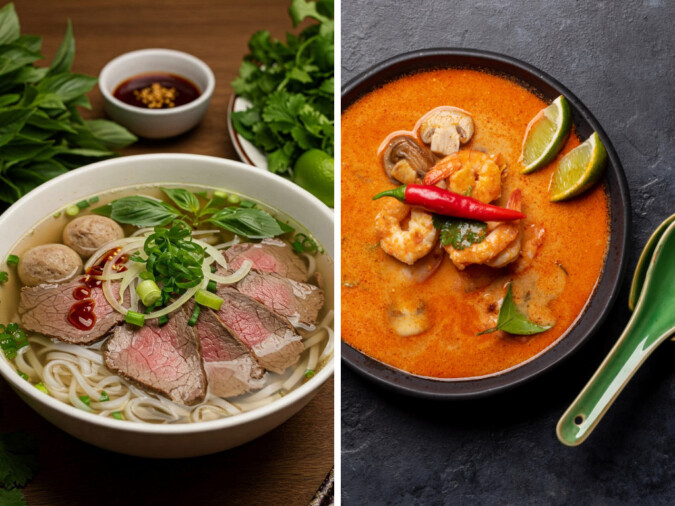
Budget travellers typically spend USD 20–35 per day. Mid-range comes in at USD 45–95. Vietnam is consistently pegged at 20–30% cheaper than Thailand across accommodation, food, and local transport, with the gap widest at the budget end of the market. A street beer at a bia hoi in Hanoi or Ho Chi Minh City? Around USD 0.50–1. A bowl of pho: USD 1.50–3.
Here’s the real difference
The comparison is fairly even on the ground in major cities; Bangkok and Ho Chi Minh City are reasonably similar for mid-range stays. The gap opens up at the luxury end. A five-star beachfront resort in Nha Trang or Phu Quoc costs roughly half as much as an equivalent property in Phuket or Koh Samui. Vietnam offers a better luxury-for-money equation almost across the board.
The verdict
Vietnam wins on price, across every tier. The gap isn’t always dramatic in cities, but it becomes very real on the coast and at the luxury end. If stretching your budget is a priority, Vietnam delivers more for less.
3. Beaches: Thailand Still Leads, But Vietnam Is Closing the Gap
This is where Thailand has traditionally held its most convincing advantage, and still does, if we’re being direct.
Thailand
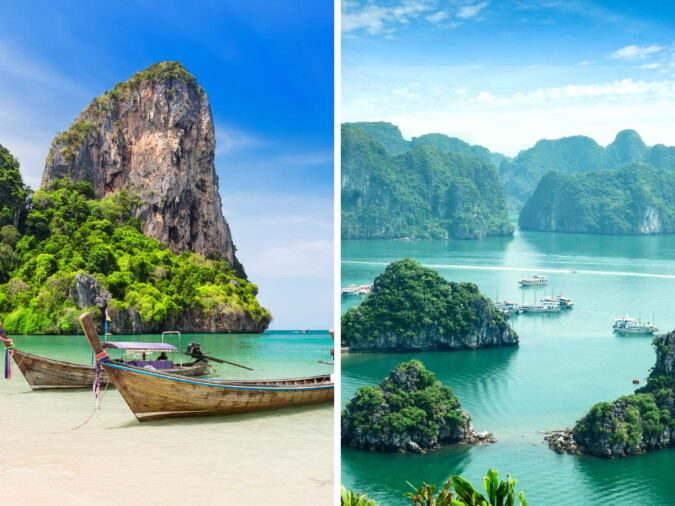
Phuket, Krabi, Koh Samui, Koh Phi Phi, Koh Lanta. The infrastructure is mature, the ferry connections are seamless, the accommodation ranges from USD 10 dorm beds to USD 1,000-a-night villas, and the nightlife on the beach is a category unto itself. Full Moon Party on Koh Pha-ngan is still the ultimate full Moon Party. The Thai island ecosystem is decades ahead of Vietnam in terms of variety, polish, and connectivity.
Vietnam
Vietnam has over 3,200 km of beautiful coastline. Phu Quoc (often compared to an earlier, quieter Phuket), Nha Trang, Da Nang, Hoi An, Quy Nhon, and the still-remote Con Dao all have their advocates. Phu Quoc in particular has developed rapidly, with luxury resort brands now present alongside the island’s quieter corners. The beaches are less crowded, the prices are lower, and the surrounding culture is richer. You can move from the beach to the ancient town to the mountain in a single country trip.
Where Vietnam falls short
Pure island-hopping infrastructure. Thailand has dozens of developed islands with reliable ferry links, consolidated booking, and consistent service quality. Outside of Phu Quoc, Vietnam still requires more planning, and service consistency varies. Maya Bay may be overcrowded, but Koh Phi Phi’s Laem Thong beach is still spectacular in a way that Vietnam’s islands haven’t quite matched yet.
The verdict
Thailand wins on beach variety, infrastructure, and the party-island experience. Vietnam wins on value, tranquillity, and integrating beach time with cultural travel. Which matters more depends entirely on your travel style.
4. LGBTQ+ Scene: Thailand Has a Legal and Cultural Head Start
Thailand
Bangkok’s Silom district is one of the most established gay neighbourhoods in all of Asia. Silom Soi 2 and Soi 4 alone house over 50 gay bars, multiple saunas, and long-running institutions like DJ Station (open since the 1990s).
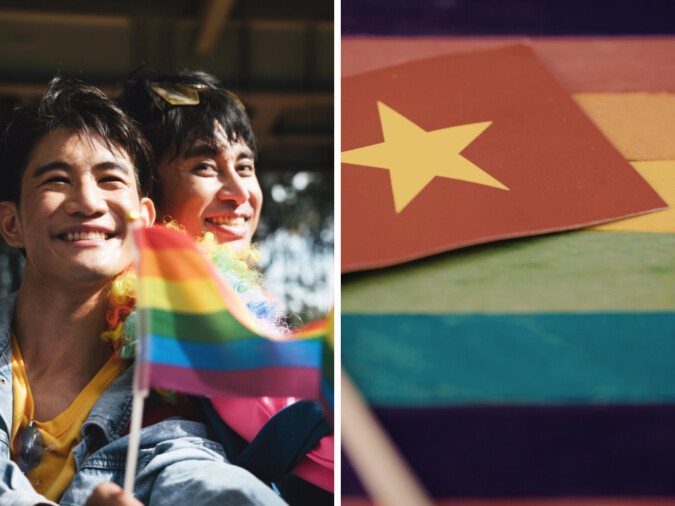
Bangkok Pride 2026 returned to Silom Road on 31 May, with five days of events, drag performances, film festivals, and hotel parties. The legal landscape shifted significantly too; Thailand’s Marriage Equality Act took effect on 23 January 2025, making it the first country in Southeast Asia to legalise same-sex marriage. The vote passed 130–4 in the Senate, with royal assent from the King.
LGBTQ+ travel to Thailand was worth an estimated USD 6.5 billion pre-pandemic, and the country has explicitly positioned itself as a regional leader on these rights.
Vietnam
The scene exists and is growing in Ho Chi Minh City. The city’s District 1 has a cluster of gay bars, clubs, and drag shows, and VietPride has run annually since 2012, growing from a small bicycle ride into a multi-event celebration. Hanoi has its own emerging scene, with the Queer Zone project and rainbow-stickered businesses forming an informal LGBTQ+-friendly map. Hotels across both major cities are broadly welcoming. Vietnam decriminalised homosexuality in 1993, and a 2023 poll found 65% of Vietnamese people support legalising same-sex marriage; one of the highest figures in Asia.
Where Vietnam falls short
The law hasn’t followed public sentiment. Same-sex marriages are still not legally recognised in Vietnam. There are no formal anti-discrimination protections in employment, housing, or family recognition. The scene outside Ho Chi Minh City and Hanoi is limited, and visible public affection can draw attention outside urban areas. Vietnam feels tolerant in the cities; it isn’t yet protective in law.
The verdict
Thailand leads in both infrastructure and legal rights. This isn’t a particularly close flight. Bangkok’s Silom is a fully formed gay neighbourhood with decades of history. Vietnam’s scene is warm and growing, but it’s not yet in the same league. If LGBTQ+ safety and community are significant factors in your travel decision, Thailand remains the stronger choice in Southeast Asia.
5. Shopping Malls: A Closer Race Than You’d Expect
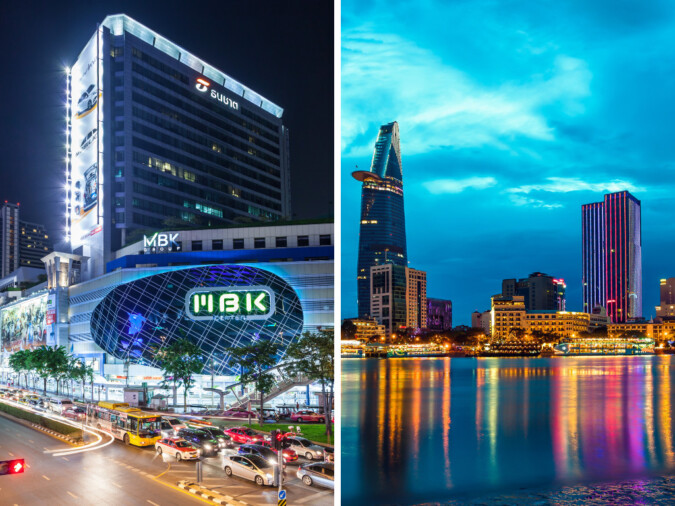
This one surprises people. Bangkok has extraordinary retail: Siam Paragon, CentralWorld, IconSiam, and Terminal 21 are world-class malls. IconSiam along the Chao Phraya is arguably one of the most impressive retail developments in Asia.
Thailand
Bangkok’s malls aren’t just places to shop; they’re climate-controlled escapes, entertainment complexes, and food destinations in their own right. Siam Paragon has a sea life aquarium in the basement. CentralWorld hosts international events. The variety of food courts alone warrants a visit. Phuket, Pattaya, and Chiang Mai also have solid retail options, though nothing on Bangkok’s scale.
Vietnam
Ho Chi Minh City (HCMC) and Hanoi have both invested heavily in retail over the past decade. In HCMC, Saigon Centre (home to Takashimaya, Louis Vuitton, Gucci, and Burberry) is the luxury anchor. Vincom Center Dong Khoi carries Zara, H&M, and Mango alongside Vietnamese designers.
Crescent Mall and Vincom Mega Mall Thao Dien serve the expat districts. In Hanoi, Lotte Mall Hanoi is the headline act. Imagine a full lifestyle mall with cinema, aquarium, supermarket, and international brands. Vincom Mega Mall Royal City is one of Vietnam’s largest underground shopping centres, with an ice rink and bowling alley. Over 200 shopping malls now operate across Vietnam.
Where Vietnam still trails
Luxury breadth and density. Bangkok has multiple malls operating at the apex of international retail simultaneously. Vietnam’s luxury is concentrated in a handful of anchor stores within larger, more mixed-use centres. And Bangkok’s mall culture has a maturity that Ho Chi Minh City is still building toward.
The verdict
Bangkok still wins on sheer scale and variety of luxury. But Vietnam’s malls, such as Lotte Mall Hanoi and Saigon Centre in HCMC, are definitely worth a visit. For most travellers, what Vietnam offers is more than enough.
Is Vietnam Taking Thailand’s Crown?
Thailand still leads on beaches, LGBTQ+ infrastructure, shopping variety, and the seamlessness of a well-worn tourist machine. It has 30 years of tourism infrastructure development on Vietnam, and that shows in a hundred small ways: the ferry connections, the English signage, the cocktail sunset bars on the right beach at the right time.
But Vietnam is doing something interesting. It’s growing faster than anywhere else in Southeast Asia. Their visa policy is currently more welcoming than Thailand’s. Its prices are lower. Vietnam’s coasts are less crowded. And it offers cultural texture; the old towns, the history, the food markets, the coffee culture that beach-resort Thailand sometimes lacks.
The smarter framing might be this: for travellers who once did Thailand on autopilot, Vietnam is now a serious first-time option rather than a second trip. And for those who’ve done Bangkok a few times and want something that feels less processed, Vietnam is increasingly the answer.
Thailand isn't going anywhere. But it's no longer the automatic default it once was.
All figures current as of June 2026. Visa policies can change. Always check official embassy and immigration sources before you travel.