
Limoncello sunshine in a loaf: The only easy lemon cake recipe you’ll ever need
This limoncello lemon cake is what happens when a classic lemon loaf gets a very grown-up upgrade. A fragrant, buttery crumb spiked with Italian limoncello, finished with a lemon curd glaze that melts into the hot cake and sets into a glossy, jammy crust as it cools. One bowl, 45 minutes, and the kind of result that makes people ask if you bought it from a bakery.
Jump to RecipeHere’s Why You Need to Make This Limoncello Lemon Cake Right Now:
- One bowl, no drama. No creaming cold butter, no separating eggs, no multiple bowls. You weigh, mix, and bake.
- The lemon curd glaze trick. Slathered onto the hot cake the second it comes out of the oven, the curd seeps into every crack, then sets into a glossy, jammy glaze.
- Limoncello over lemon juice. The alcohol adds warmth and depth that juice alone lacks.
Beating the sugar and eggs
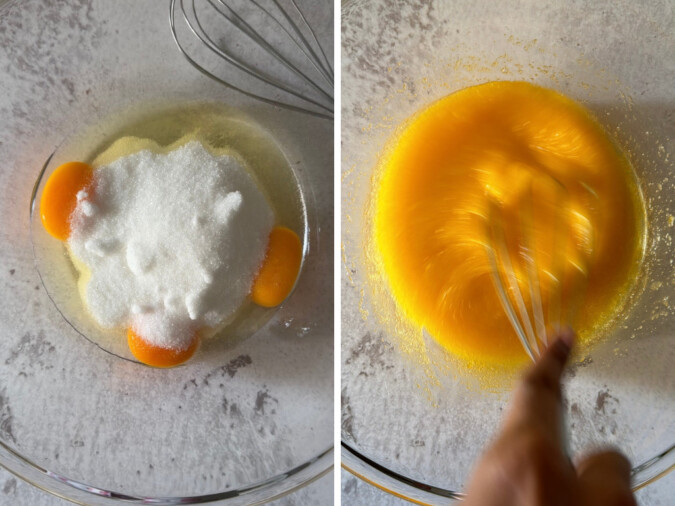
The first step is beating the sugar and eggs together until the sugar “melts” into the eggs. You’re looking for the granules to dissolve, the mixture to turn pale and slightly thickened.
By hand: This takes effort. Expect 3 to 5 minutes of active whisking with a balloon whisk, working in circular strokes. The upside is more control, because you can feel when the texture changes.
By machine: A handheld electric mixer on medium speed gets you there in about 2 minutes. Don’t go on high; you want the sugar dissolved and the mixture pale, not a mousse.
Either method works. Don’t rush this step; undissolved sugar affects the texture and can leave a gritty crumb.
Looking for dessert recipes? Check out our Desserts section.
Do not overwork the lemon cake batter
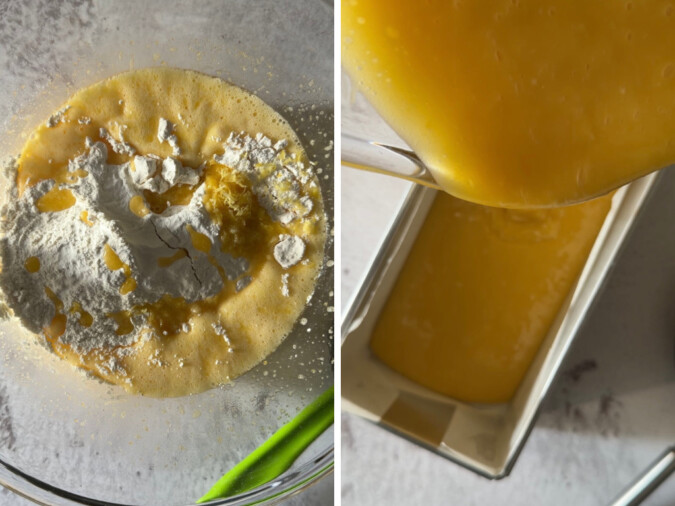
Once the melted butter, flour, lemon zest, and limoncello go in, you’re mixing gently until the last traces of flour disappear.
Overworking a batter made with self-raising flour develops the gluten too aggressively. The result is a cake that rises unevenly, forms a tight, cracked crust on top, and comes out tougher than it should. The texture shifts from cakey to bready, and the soft, tender crumb you’re after disappears.
Mix until you just can’t see dry flour. A few streaks are absolutely fine, as this will disappear once the baking starts.
The Lemon Curd Glaze: The Most Important Step
The heat of the cake does the work. As the curd hits the surface, it liquefies, seeps into every crack and crevice, and as the cake cools in the tin, it sets back into a glossy, jammy glaze.
Tip the cake out too soon, and you lose the glaze before it sets. Spread the curd on a cold cake, and it just sits on top, decorative but not integrated.
Patience here is the whole trick. The cooling cake-and-curd combo is where the magic happens.
On the curd itself: Bottled lemon curd is the right call here. Shop-bought curd has a consistent texture that spreads evenly and sets predictably. Homemade curd can be looser and may not set the same way. Either works, just manage your expectations.
A Note on the Limoncello
Fifty millilitres is about three tablespoons. The alcohol mostly bakes off, leaving a warm, rounded lemon flavour that makes this cake feel more complex than a standard lemon loaf.
Can I substitute lemon juice for limoncello? Yes. Use 30ml of fresh lemon juice and add a small splash of vanilla extract to balance the warmth and add depth. It won’t be identical, but it’ll still be an excellent easy lemon loaf cake.
If you do have limoncello, pour yourself a small glass while you wait! Or not; some of our friends say it tastes pretty awful. The good thing is, in this cake, you can’t tell!
Frequently Asked Questions
How do I keep a lemon loaf cake moist? Two things in this recipe do that work: melted butter (which keeps the crumb softer than creamed butter) and the lemon curd glaze applied while the cake is hot. The curd seeps in, adding a layer of moisture that stays even on day two.
Can I make this limoncello lemon cake ahead of time? Yes, as it actually improves overnight. The lemon curd glaze sets more fully, and the flavours deepen. Store at room temperature, covered, for up to 2 days. It’ll have to be in the fridge thereafter. You can reheat it in a microwave oven when eating.
What does lemon curd do to a cake? Here, it acts as a glaze rather than a filling. Applied to a hot cake, it melts into the surface and sets as the cake cools, adding tartness, moisture, and a glossy finish in one move.
Can I use a different tin? A 9-by-3-inch loaf tin works best. A round tin will also work, but baking times may vary. Start checking at 25 minutes.

Limoncello Lemon Cake with Lemon Curd Glaze (Easy One-Bowl Recipe)
Course: Dessert / Tea SnackCuisine: EuropeanDifficulty: Easy8
slices7
minutes23
minutesA fragrant, tender lemon loaf cake spiked with limoncello and finished with a lemon curd glaze that seeps into the hot cake as it cools. One bowl, no fuss, and ready in under an hour.
You’ll need;
180g caster sugar
3 eggs
180g butter, melted and slightly cooled
180g self-raising flour
Zest of 1 lemon
50ml limoncello
50g lemon curd (from a jar)
You’ll need to;
- Prepare your tin. Preheat oven to 180°C (350°F / Gas 4). Grease and line a 9-by-3-inch loaf tin with parchment paper, leaving a small overhang on the sides for easy lifting.
- Beat the sugar and eggs. In a large bowl, whisk the sugar and eggs together until the sugar dissolves and the mixture turns pale and slightly thickened. This will take 3 to 5 minutes by hand, about 2 minutes with an electric mixer on medium speed.
- Add the remaining ingredients. Pour in the melted butter, sift in the flour, and add the lemon zest and limoncello. Mix until just combined and stop the moment you can’t see dry flour. Do not overmix. (See notes.)
- Bake. Pour the batter into the prepared tin and smooth the top. Bake for 35 minutes, or until a skewer inserted into the centre comes out with just a few moist crumbs; not wet batter, not bone dry.
- Glaze immediately. The moment the cake comes out of the oven, spread the lemon curd generously over the hot surface. Then walk away and let the cake cool completely in the tin.
- Serve. At room temperature or very slightly warm. A little extra lemon curd on the side never hurts.
Notes
- Butter temperature: Melted butter should be warm to the touch, not hot; you don’t want scrambled eggs in your batter.
- Don’t overmix: Once the flour goes in, mix rather than whisk, and stop the moment the flour disappears. Overworked batter = tough crumb and a cracked, crusty top.
- The curd glaze: Spread it on within a minute of the cake leaving the oven, then leave it alone. Don’t rush cooling by refrigerating; let it happen at room temperature so the glaze sets properly.
- No limoncello? Substitute 30ml fresh lemon juice and a small splash of vanilla.
- Storage: Covered at room temperature for up to 2 days. Gets better on day two.