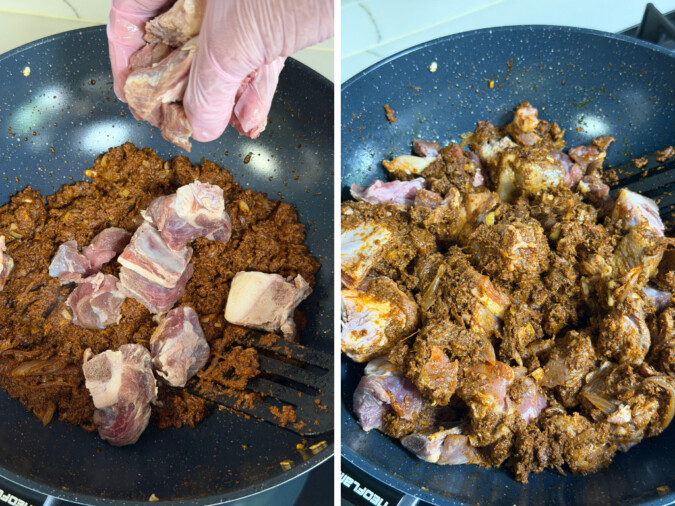
Mutton ghee roast, the slow way: Two hours on the stove for meat that falls apart
This mutton ghee roast is a little different from the others you see out there, mainly because it uses no pressure cooker. Most home recipes reach for the pressure cooker to get the job done fast. But pressure-cooked mutton can turn out firm and stringy. We simmered ours on the stove for almost two hours instead. The result was meat so tender it barely needed chewing. The mutton cooks right in a fiery masala and plenty of ghee. Every piece soaks up the spice as it simmers.
We adapted our version from Steffi’s Recipes. We swapped the pressure cooker for a slow simmer on the stovetop. We also used regular dried red chillies since we didn’t have Kashmiri chillies on hand.
Jump to RecipeHere’s Why You Need to Make This Mutton Ghee Roast Right Now:
- No pressure cooker needed. Just a heavy pot, a low flame and a little patience.
- Softer, more tender meat. A slow simmer breaks down tough cuts far more gently than high pressure.
- Flavour in every bite. The mutton simmers in the masala, so the spices go deep into the meat.
A little history of ghee roast
Ghee roast comes from Kundapur, a small coastal town in Karnataka, India. Shetty Lunch Home, a family restaurant that opened there in 1956, is widely credited with its creation. Chicken was the original star. Prawn, mutton and paneer versions followed.
The “roast” in the name doesn’t mean the oven. It refers to cooking the masala slowly in ghee until the fat separates and the spices darken. That is where all the flavour comes from.
The classic version uses Byadgi chillies for colour and tamarind for tang. This home-style recipe uses lemon juice instead. It is simpler to make, but still rich, smoky and deeply savoury.
Why we skipped the pressure cooker
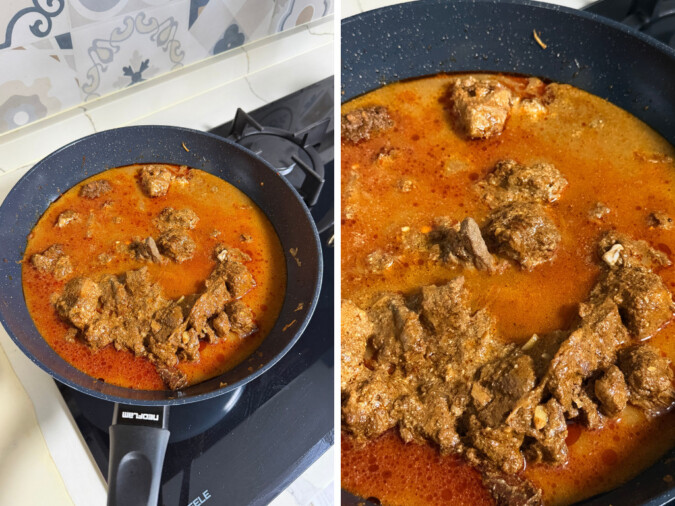
A pressure cooker is brilliant on a busy weeknight. It can soften mutton in about 20 minutes. But the high heat and speed can tighten the meat fibres. The mutton ends up cooked, but not quite melting.
A slow stovetop simmer works differently. Gentle heat over a longer time breaks down the connective tissue. The meat relaxes and turns soft without drying out.
How long does it take? We simmered ours for almost two hours. Start checking at 90 minutes. The mutton is ready when a piece pulls apart easily with a fork.
Keep an eye on the water. Check the pot every 20 to 30 minutes. If the liquid drops below the meat, top it up with hot water. And remember to keep stirring it.
Looking for more Indian recipes? Check out our Poultry & Game section.
No Kashmiri chillies? Use fewer regular ones
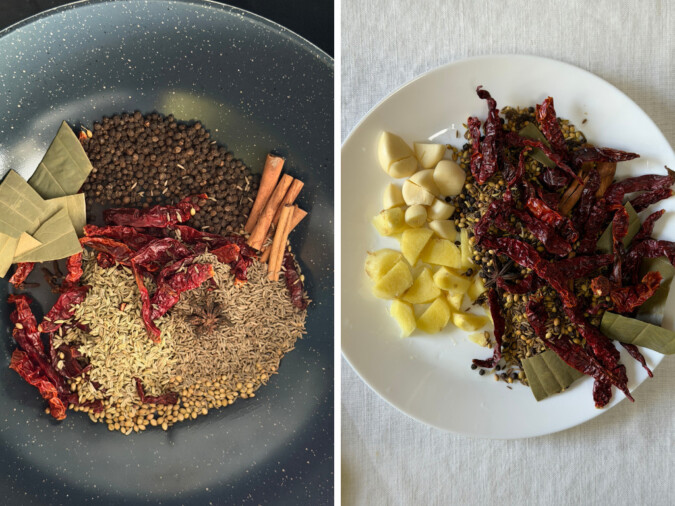
Kashmiri chillies are prized for their bright red colour and mild heat. They make the masala look vibrant without blowing your head off.
Regular dried red chillies are much hotter in flavour. If using them, cut the quantity roughly in half. Your mutton ghee roast will be slightly darker and less red, but it will taste just as good. This is what we did here, using regular dried red chillies.
Want more colour? Add a teaspoon of paprika to the masala. It brings back some of that red without extra heat.
Why we cook the mutton in the masala
Many recipes boil the mutton separately, then toss it in the masala at the end. It works, but the spice mostly coats the outside.
We did it differently. We add the mutton straight to the masala and simmer it for almost two hours. As it softens, it absorbs the chilli, pepper and ghee. Every piece ends up seasoned right through.
The final reduction. Once the meat is tender, uncover the pot and turn up the heat. Let the liquid cook off until the masala clings to the mutton. It’s ready when the ghee separates and pools at the edges.
Prefer a gravy? Stop reducing a little earlier. Leave some sauce in the pot for a looser, curry-style dish.
Frequently Asked Questions
Can I use lamb instead of mutton? Yes. In Singapore, mutton usually means goat. Lamb works just as well and may soften a little faster.
What should I serve with mutton ghee roast? White rice is the classic pairing. Chapati, regular dosa or plain steamed rice are all excellent too.
Why is the masala sticking to the pot? Thick masala catches easily on a long simmer. Use a heavy-bottomed pot, keep the heat low and stir every 20 to 30 minutes.
How do I make it less spicy? Reduce the dried red chillies and add paprika for colour instead. A spoonful of yoghurt on the side also helps.
Can I make mutton ghee roast ahead of time? Yes, and it gets better overnight. Store it in the fridge for up to 3 days. Reheat gently on the stove.
Can I still use a pressure cooker? Yes. Cook the mutton in the masala with just enough water to cover it. Allow 4 to 5 whistles on medium heat. Then reduce the masala in an open pot until thick.
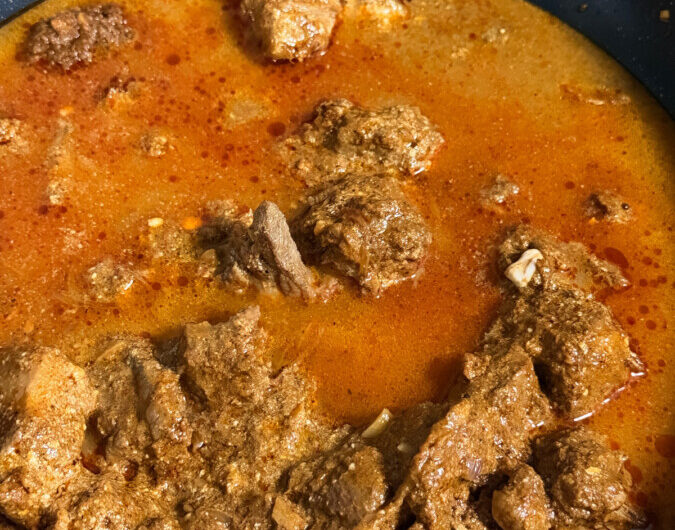
Mutton Ghee Roast (Slow-Cooked, No Pressure Cooker)
Course: MainCuisine: IndianDifficulty: Medium6
servings45
minutes2
hoursYou’ll need;
- For the roasted masala
10 to 12 dried red chillies in total (see notes)
1 tablespoon coriander seeds
2 teaspoons cumin seeds
1 teaspoon fennel seeds
1 tablespoon black peppercorns
1 cinnamon stick
4 cloves
1 star anise
- To grind with the masala
2.5cm piece of ginger
2 cloves of garlic
1 tablespoon lemon juice
4 tablespoons water
- For the ghee roast
1kg mutton (goat or lamb), bone-in, cut into pieces
¼ cup (60ml) ghee, plus 3 tablespoons
1 tablespoon ginger garlic paste
½ teaspoon turmeric powder
2 tablespoons plain yoghurt
Salt, to taste
Water, enough to cover the meat
A handful of curry leaves
You’ll need to;
- Roast the spices. Dry roast the chillies in a pan for about 3 minutes, then set aside. Roast the remaining whole spices until fragrant. Take care not to burn them.

- Grind the masala. Blend the roasted spices with the ginger, garlic, lemon juice and water into a smooth paste.
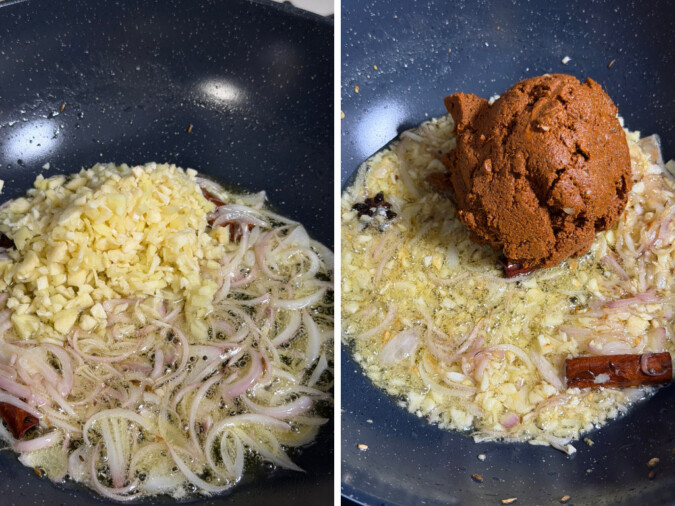
- Cook the masala. Melt all the ghee in a heavy-bottomed pot. Add the ginger-garlic paste and turmeric, then stir for a minute. Add the masala paste and yoghurt. Cook, stirring, for 5 to 8 minutes until it darkens slightly.

- Add the mutton. Add the mutton and some salt. Toss well to coat every piece. Cook for about 5 minutes.

- Simmer slowly. Pour in enough water to just cover the meat. Bring to a boil, then lower the heat. Cover and simmer for 1½ to 2 hours, until fork-tender.
- Stir and top up. Stir every 20 to 30 minutes, scraping the base. Add hot water if the liquid drops below the meat.
- Reduce. Uncover and raise the heat to medium. Cook until the masala thickens, clings to the mutton, and the ghee separates.
- Finish. Stir in the curry leaves and turn off the heat. Serve hot.
Notes
- Chillies: This recipe uses regular dried red chillies. If you have Kashmiri chillies, use 10 Kashmiri plus 6 to 7 regular ones, as in the original.
- Colour: Regular chillies give a darker colour. Add a teaspoon of paprika for a brighter red.
- Cooking time: Older mutton may need longer. Keep simmering until a fork slides in easily.
- Stirring: The masala can catch on the bottom during the long simmer. Keep the heat low and stir often.
- Ghee: Don’t cut back too much. The ghee carries the flavour and gives the dish its glossy finish.
- Storage: Refrigerate for up to 3 days. It tastes even better the next day.