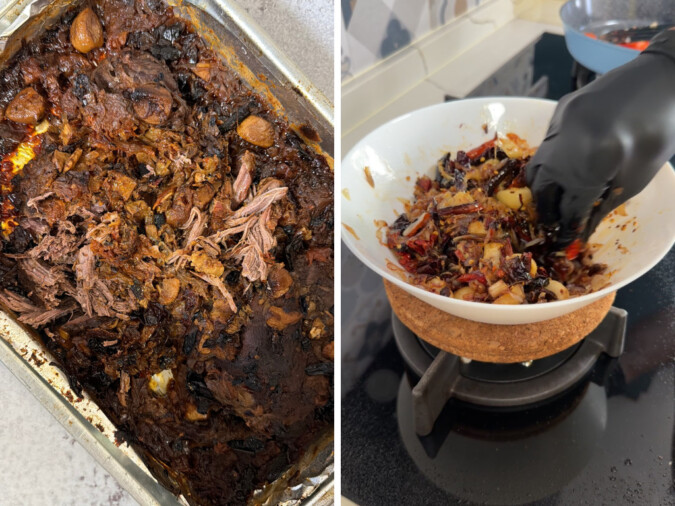
The Slow Roast Mutton that will have you swapping out lamb for this more muscular meat.
This slow-roast mutton recipe was born of a simple question: what happens if you take the Indian-spiced raan and apply it to mutton instead of lamb? The answer, after five hours in the oven, is something extraordinary.
Something that falls apart at the touch of a fork, carries the deep, almost gamey richness that only mutton has, and is plastered with a hand-pounded paste of dried chillies, charred tomatoes, ginger, garlic, and slow-caramelised shallots.
Why You Need to Make This Slow Roast Mutton:
- Mutton, not lamb. Lamb is younger, milder, and more widely available. Mutton is older, darker, and far more flavourful. The stronger, deeper meat holds up to a bold spice paste that would overwhelm lamb. This recipe is designed for mutton’s muscle.
- The paste is the whole recipe. You’re not just rubbing spices on meat. You’re building a layered, hand-pounded paste from scratch. Chillies fried until puffy, garlic and ginger cooked to softness, shallots caramelised for 20 minutes, tomatoes charred and skinned.
- Five hours of low heat = fall-off-the-bone tender. The long, slow cook at 150°C breaks down the connective tissue in the mutton, turning what could be a tough, chewy cut into meat that pulls apart effortlessly. Put it in the oven and walk away.
Mutton vs lamb
Lamb refers to an animal under a year old; mutton is typically two years or older. That extra time means more developed muscle, more fat, and a significantly more complex, deeper flavour.
The trade-off is that mutton takes longer to become tender, which is why slow-roasting works well. The low heat and long cooking time allow the collagen in the meat to break down gradually, resulting in melt-in-the-mouth rather than tough. The reward for that patience is meat that’s darker, richer, and more flavourful.
Mutton can be found in supermarkets in Singapore, especially in the frozen section. However, getting fresh mutton is worth the trip to the market, especially if you’re making this for the first time.
A word of caution: mutton butchers are used to cutting up mutton into cubes. So you can tell them you’d like 1KG of mutton leg, boneless, fat removed and “please don’t cut!” The butcher might give you a puzzled look, but they will acquiesce eventually. Good luck; this part can be intimidating.
The Indian spice paste
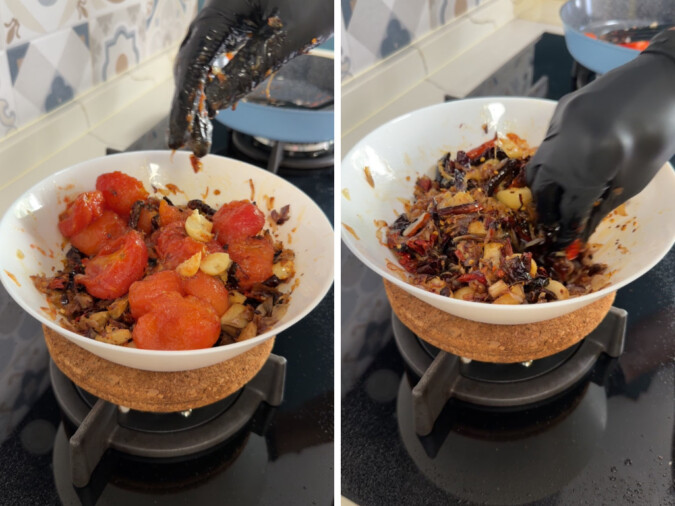
The paste for this slow roast mutton recipe is built in stages, frying each ingredient separately before combining them.
The dried red chillies go in first, into hot oil. You’re watching for them to puff up and turn a deeper, almost brick-red brown. This toasting unlocks their smoky flavour. Manage the heat (low if they start smoking too much) and do not walk away; they can go from perfect to acrid very quickly.
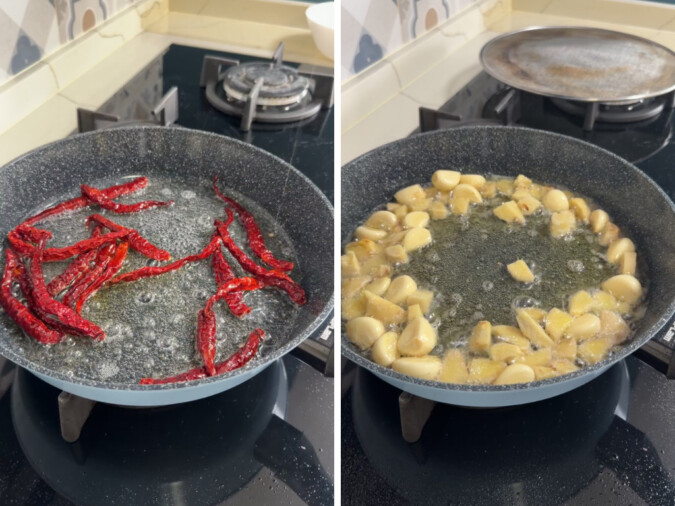
The ginger and garlic go in together. The goal is for the garlic to soften and lose its raw edge, and the ginger to cook through and mellow. You’ll get a warm, fragrant waft of garlic and ginger scent when it’s done. Remove it when you get this smell; otherwise it’ll just burn.
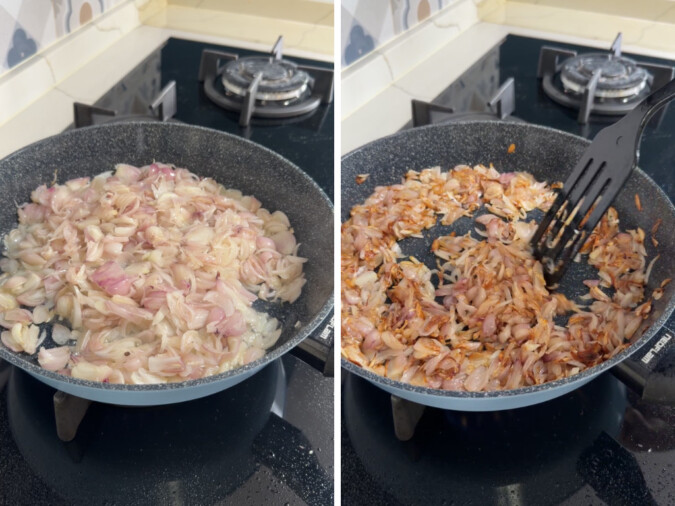
The shallots need about 15 to 20 minutes over medium heat to go properly soft and caramelised. Stir them regularly, especially toward the end. Pale, undercooked shallots bring bitterness to the paste; caramelised shallots bring sweetness and depth that balances the heat from the chillies.
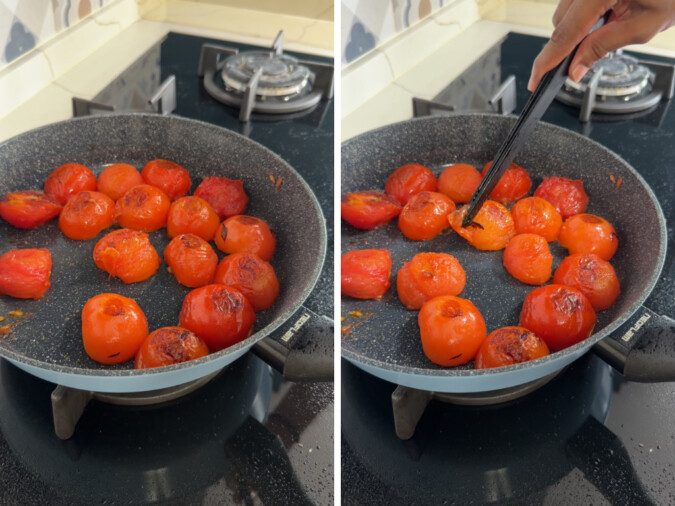
The tomatoes go in cut-side down, covered with a lid, for a few minutes, then flipped and covered again. The steam loosens the skins, which you then peel off and discard. What’s left is concentrated, soft tomato flesh that’ll melt into the paste, binding everything together.
Mash the marinade
Once everything is cooked and combined in a bowl, season with salt, then use your hands to work the mixture into a rough paste. Break the chillies, mash the tomatoes into the ginger and garlic, and crush the softened shallots. You’re not going for smooth; you want a knobbly, chunky paste with some texture. A blender would make it too uniform and lose the character of each element.
This paste is then applied directly to the mutton. Spread it evenly, stuff it into any crevices, flip the meat and massage it in on all sides.
Slow roast the mutton on low heat
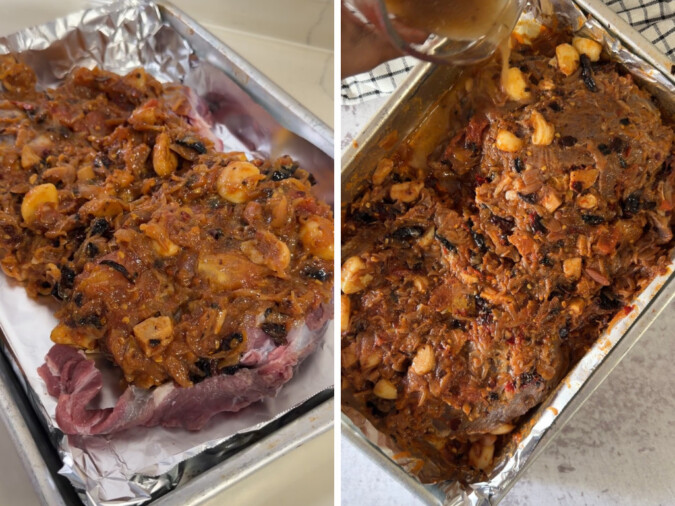
The oven starts at 220°C for the first 30 minutes. This initial blast is to get the tray hot and start the process. Then the temperature drops to 150°C for the remaining four hours.
At that lower temperature, the mutton braises gently in the lamb stock, which floods the tray before you seal it with two sheets of foil. The stock keeps the meat moist, the foil traps the steam, and the long, low heat breaks down the collagen in the mutton’s connective tissue into gelatin.
At high heat, the outer meat would seize and tighten before the inside has a chance to become tender.
Salting cautiously when you roast a lamb
Both salt and stock are variables in this recipe, and they interact. Saltiness varies widely in homemade and store-bought stock. If you’re using a concentrate or cube, taste a spoonful of the dilution before you season the paste, and be conservative. You can always add more once the dish is cooked; you can’t remove it.
If you’re using homemade stock with no added salt, season the paste more confidently.
Frequently Asked Questions
Can I use lamb instead of mutton? Yes. Use a bone-in lamb shoulder (which has more fat than the leg and tolerates long cooking better) and reduce total oven time to about 3 to 3.5 hours at 150°C. A boneless leg of lamb will dry out over five hours, so the shoulder is the right cut if you’re substituting.
How long does mutton take to slow roast? This recipe runs 30 minutes at 220°C followed by 4 hours at 150°C. The result is meat that falls apart with a fork. Mutton’s denser muscle needs longer to fully break down than lamb’s.
Can I make this slow roast mutton ahead of time? Yes, and it’s arguably better the next day. The paste flavours deepen overnight in the fridge. Reheat covered with the foil back on, in a 150°C oven for about 30 to 40 minutes, with a splash of water added to the tray if it looks dry.
Why do you cook mutton at a low temperature? Mutton is older and has more connective tissue than lamb. High heat seizes the outer muscle before the inside has a chance to tenderise. Slow heat at 150°C gently breaks that connective tissue into gelatin. Gelatin gives the meat its silky, pull-apart texture.
Do I need to marinate overnight? This recipe doesn’t require an overnight marinade, as the freshly made paste and the long cooking time do the work. That said, if you want to assemble the paste the evening before and leave the mutton in it overnight in the fridge, do it!
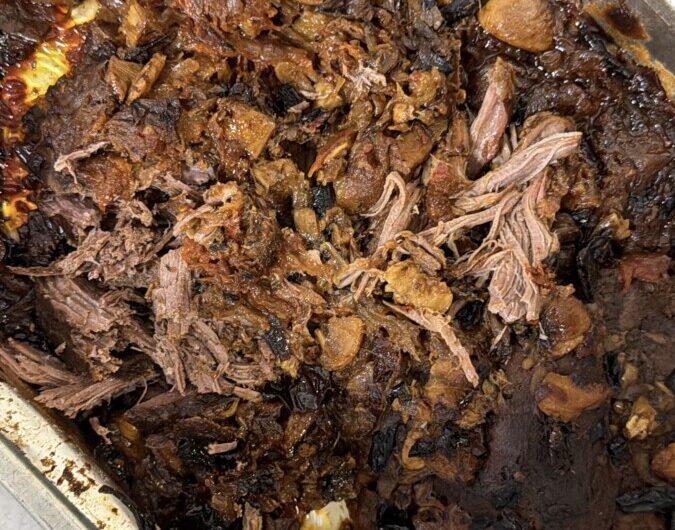
Slow Roast Indian-Spiced Mutton
Course: MainCuisine: IndianDifficulty: Medium4 – 6
servings40
minutes5
hoursA boneless leg of mutton slow-roasted for five hours under a bold, hand-pounded paste of dried chillies, caramelised shallots, ginger, garlic, and charred tomatoes.
You’ll need;
1kg boneless leg of mutton
30 – 50ml sunflower oil (or coconut oil)
17 dried red chillies (reduce to 12 for less heat)
50g fresh ginger, peeled and roughly chopped
50g garlic cloves, peeled
200g shallots, peeled and sliced
8 medium tomatoes, halved
Salt to taste (see notes)
500ml lamb stock (see notes)
Fresh coriander, roughly chopped, to serve
You’ll need to;
- Prepare the tray and preheat the oven. Preheat the oven to 220°C (400°F). Line a large roasting tray with two layers of aluminium foil, leaving enough overhang to cover the meat later. Place the mutton in the centre of the tray and set aside.
- Fry the chillies. Heat the oil in a large wok or frying pan over medium heat. Add the dried chillies and fry until they puff up and deepen to a dark brick-red, about 2 to 3 minutes. Watch them carefully; they can go from perfect to burnt quickly. Remove with a slotted spoon and place in a large bowl.
- Fry the ginger and garlic. In the same oil, add the ginger and garlic together. Fry until the garlic has softened and the ginger is cooked through and fragrant, about 5 to 7 minutes. Remove and add to the bowl with the chillies.
- Caramelise the shallots. Add the sliced shallots to the pan (add a little more oil if needed). Cook over medium heat, stirring regularly, until the shallots are deeply soft, golden, and caramelised. This takes about 15 to 20 minutes. Be patient; undercooked shallots will make the paste bitter. Remove and add to the bowl.
- Char and skin the tomatoes. Place the tomato halves cut-side down in the hot pan. Cover and cook for 2 to 3 minutes. Remove the lid, flip each tomato half over, cover and cook for another 2 minutes. Remove the lid, flip back to the cut side down, and, using tongs, gently pinch and peel the skins away. They should slip off easily after the steam has loosened them. Discard the skins, remove the tomato flesh and add to the bowl.
- Make the paste. Season the bowl of cooked ingredients with salt. Wearing a glove, use your hands to smush everything together. Break up the chillies, mash the tomatoes into the garlic and ginger, and work it all into a rough, knobbly paste. Don’t aim for smooth; texture is good here.
- Coat the mutton. Spread the paste generously over the mutton, working it into any crevices. Flip the meat over and repeat on all sides. You want the mutton fully covered.
- Add the stock and seal. Pour the lamb stock into the tray around the mutton. Cover the tray tightly with 2 sheets of foil, sealing the edges well to trap the steam.
- Slow roast. Place in the preheated 220°C oven for 30 minutes. Then reduce the temperature to 150°C and continue roasting for a further 4 hours. Do not open the foil during this time.
- Rest and serve. Remove from the oven. Bring the tray to the table, carefully remove the foil (there will be a lot of steam), scatter fresh coriander generously, and serve directly from the tray.
Notes
- Salt: Go cautiously with the salt in the paste; stock cubes and concentrates are already salty. Taste your diluted stock before seasoning and adjust accordingly.
- Stock: A stock concentrate, cube, or homemade stock all work. If using homemade unsalted stock, you can season more generously.
- On the chillies: 17 dried red chillies make this spicy. For a milder result, reduce to 10-12. Remove the seeds from a few before frying for even less heat.
- Substituting lamb: Use a bone-in lamb shoulder and reduce oven time to 3 to 3.5 hours at 150°C total. Don’t use a boneless lamb leg as it will dry out over this cooking time.
- Make ahead: Assemble and paste the mutton the night before, refrigerate uncovered, then bring to room temperature for 30 minutes before roasting. Leftovers reheat well. You can cover with foil and warm at 150°C for 30 to 40 minutes with a splash of water added to the tray.
- Serving suggestions: Great with plain rice, flatbread, or a crisp cucumber and mint salad to balance the heat.